Growing Copiapoa: Refined Greenhouse vs. Habitat Character
Copiapoa are best understood as four recurring ecotype zones, with local variants within each, aligned to the Atacama’s fog and elevation gradient. Nearly every difference in cultivation response, including light tolerance, watering needs, heat sensitivity, pruina behavior, and pest resistance, traces directly to the plant’s native ecotype zone along this fog gradient. If the zone is mismatched, no amount of precision in soil, watering, or fertilization will produce habitat-correct results.
Conditions that suit a Paposo-type coastal anchor will produce fundamentally incorrect results when applied to plants from Cerro Perales or El Soldado type interior anchors. Provenance determines outcome. The sections below follow this ecotype framework wherever meaningful differences occur.
Greenhouse cultivation: comfort for some, stress for others
Controlled greenhouses with stable temperatures, filtered light, and regular water and fertilizer promote faster growth and earlier flowering across the genus. Outcomes, however, vary sharply by ecotype:
- Coastal Fog Belt (Zone 1) respond well to cool, filtered greenhouse conditions that approximate dense fog influence, producing plump, chalk-white plants with heavy pruina and frequent flowering.
- Transitional Fog Belt (Zone 2) grow faster than in habitat and remain attractive, though often slightly greener.
- Inland Fog-Shadow (Zone 3) grow acceptably but commonly appear softer and paler than habitat-grown plants.
- High Montane (Zone 4) often perform poorly in greenhouses. Without strong UV exposure and cold nights, they remain oversized, green, and structurally weak. This contrast is most evident when comparing coastal anchors such as Paposo with fog-edge or interior anchors such as Cerro Perales.
The Phase-Shift effect
In habitat, inland and high-elevation Copiapoa operate under chronic atmospheric water limitation. Growth is slow, tissue investment is conservative, and morphology reflects long-term reliance on mineral substrates, extreme thermal cycling, and minimal liquid water availability.
When these same plants are placed in greenhouse conditions with regular irrigation, elevated humidity, and warm nights, a physiological phase shift occurs. The plant transitions from a stress-regulated, compact growth strategy toward bulk hydraulic uptake through the root zone. This shift is most pronounced in plants from inland fog-shadow and fog-edge anchors such as El Soldado and Cerro Perales. The visible result is accelerated growth, greener epidermis, softened tissue, and loss of the dense, armored character seen in habitat.
This shift is not damage. It is a metabolic re-prioritization. Reversing it requires restoring the constraints under which the original morphology evolved: restricted soil moisture, strong thermal gradients, intense light, and mineral-dominant substrates.
Hard-grown cultivation: habitat character for the right zone
Mimicking the Atacama’s dryness, mineral soils, intense light, UV exposure, and temperature swings produces slow, compact, resilient plants. Results depend strongly on ecotype:
- Coastal Fog Belt (Zone 1) rarely develops true hard-grown darkness or armor. When pushed too hard, chalk-white clones grey out and elongate as they abandon their fog-adapted strategy.
- Transitional Fog Belt (Zone 2) develop attractive pale grey tones under moderate stress.
- Inland Fog-Shadow (Zone 3) develop dense spination and dark epidermis characteristic of habitat plants.
- High Montane (Zone 4) express bronze to golden surface glaze, miniature stature, and upright armored spines under full sun, strong UV, cold nights, and strictly limited soil moisture. Plants from Cerro Perales-type anchors require these conditions to re-express habitat character. Paposo-type coastal anchors should never be pushed into this regime.
🔴 Principle: Pretty is not the same as healthy, and neither is necessarily habitat-correct.
Thermal load and pigmentation
Achieving the near-black armor seen in Zone 3 and Zone 4 specialists requires more than high UV exposure. It also requires a low-albedo thermal environment. Dark top dressings increase boundary-layer temperature and thermal load at the stem surface. When combined with strong light and airflow, this often correlates with deeper pigmentation in ecotypes predisposed toward dark coloration. This response is restricted to inland and montane lineages and cannot be induced in true coastal fog belt forms.
Balancing the Two Approaches
Most successful growers blend both styles by zone:
- Start seedlings and young plants in gentle greenhouse conditions.
- Gradually harden off Zone 2 to Zone 4 plants as they mature.
- Keep true coastal fog clones mild and diffuse at all stages.
Match the cultivation style to the ecotype and Copiapoa will express habitat-correct character, whether a blinding-white coastal form or a compact bronze montane plant. Get it wrong and even meticulous care produces generic, misplaced forms. The zone is everything.
🔴 Note: Physical damage is sometimes mistaken for "hard-grown" character. Scars, corking from injury, sunburn, and other forms of damage are signs of tissue injury, not habitat-correct cultivation. Authentic resilience arises from matching a plant's natural ecotype, not from accumulated damage.
Source Basis: Fog structure and vegetation zonation follow Rundel et al. (1991), Schulz et al. (2011), and Moat et al. (2021). Spine architecture, thermoregulation, and epidermal response follow Ehleringer et al. (1980), Nobel (1988), Mauseth (2005, 2006), and Aliscioni et al. (2021). Full citations are on the Reference page.

Copiapoa cinerea cultivated under conditions matched to its native ecotype
CAM Photosynthesis and the Survival Genius of Copiapoa Cacti
Beyond Standard Desert Defenses: The CAM Advantage
Copiapoa exemplify one of the most refined expressions of desert plant physiology. While many cacti survive aridity through water storage, reduced surface area, and thickened epidermis, Copiapoa operate within a more tightly constrained ecological system. Their survival depends less on episodic rainfall and more on synchronizing metabolism with nightly fog, temperature cycles, and extreme atmospheric scarcity. Central to this strategy is Crassulacean Acid Metabolism (CAM) photosynthesis.
Nighttime carbon capture, daytime conversion
Unlike most plants, Copiapoa open their stomata primarily at night. Cooler temperatures and higher nocturnal humidity sharply reduce transpirational water loss while allowing carbon dioxide (CO₂) uptake. This CO₂ is temporarily fixed as malic acid and stored in cellular vacuoles.
During daylight hours, stomata remain closed. Stored CO₂ is released internally and fed into the Calvin cycle, allowing photosynthesis to proceed under intense solar radiation without exposing the plant to severe water loss. This temporal separation of gas exchange and photosynthesis allowing Copiapoa to persist through extended periods with little or no rainfall.
🔴 CAM: They breathe at night so they can live by day.
Synchronization with the Atacama Desert environment
This metabolic rhythm aligns closely with the Atacama Desert's diurnal structure. Coastal and inland habitats routinely experience night-to-day temperature swings of 10–15 °C, creating a predictable window for nocturnal gas exchange and surface condensation. CAM physiology allows Copiapoa to synchronize carbon uptake with the coolest, most humid portion of the daily cycle, minimizing water loss while maximizing metabolic efficiency.
The same nocturnal conditions that favor CAM activity also coincide with fog interception and vapor condensation on spines, epidermis, and surrounding mineral substrates. Although these processes are physiologically distinct, they occur under the same environmental conditions and together define the nightly operating rhythm that has shaped Copiapoa evolution over long evolutionary timescales.
Hydration Is Not Growth
Hydration provides opportunity; growth occurs only when water, carbon, temperature, and metabolism are all working together. Although water uptake and CAM photosynthesis are closely coordinated by the Atacama Desert's daily environmental cycle, they are distinct physiological processes. Roots remain capable of absorbing water even when nighttime CAM activity is reduced. Growth, however, depends on more than hydration alone; it requires adequate carbon fixation, favorable temperatures, and sufficient metabolic capacity.
This ecological synchrony helps explain why Copiapoa maintain their slow, compact growth habit despite occasional moisture availability. Water alone does not determine growth. It is one component of a broader physiological system shaped by the timing, stability, and environmental rhythms of the Atacama Desert.
Because CAM depends on nighttime gas exchange, prolonged periods of elevated nighttime temperatures can create a physiological constraint even when the plant shows no visible heat injury. Warmer nights increase evaporative demand precisely when stomata must open for CO₂ uptake, increasing water loss and reducing one of CAM's principal water-saving advantages (Hultine et al., 2016). A cactus may therefore tolerate extremely high daytime temperatures while still experience reduced physiological efficiency when nights remain persistently warm. Heat tolerance and optimal metabolic function are not the same thing.
Physiological implications for cultivation
The opposite constraint occurs at the cold end of the range. As nighttime temperatures decline, the enzymes responsible for nocturnal carbon fixation become progressively less efficient, while reduced winter light further limits daytime carbon processing. Combined with wet substrate, these conditions suppress metabolism and increase the likelihood of prolonged tissue saturation, creating an environment more favorable to rot.
For this reason, fast-draining mineral substrates remain essential. They minimize the duration of root-zone moisture and reduce the risk of prolonged wet conditions when metabolic activity is naturally limited.
Cultivation strategies that emphasize cool nights, strong airflow, dry mineral substrates, restrained watering, and avoidance of unnecessary stress stacking more closely reflect the environmental conditions under which Copiapoa evolved.
Stress stacking
Plants rarely encounter every environmental challenge simultaneously in habitat. In cultivation, however, growers can inadvertently combine several stresses at once: persistently warm nights, saturated substrate, recent repotting, heavy fertilization, or abrupt changes in light. Individually, each may be tolerated. Together, they can exceed the plant's physiological capacity to respond. Successful cultivation is therefore less about avoiding any single stress than about avoiding unnecessary combinations of stress during periods of reduced physiological efficiency.
No single environmental factor determines success or failure. Rather, Copiapoa respond to the cumulative interaction of light, temperature, water availability, substrate, and physiological stress over time. The goal of cultivation is not to eliminate stress, but to avoid unnecessary combinations of stress that rarely occur together in habitat.
An integrated survival strategy
CAM photosynthesis in Copiapoa is not an isolated adaptation. It functions as part of a tightly integrated survival system that includes fog interception, mineral-dominated substrates, extreme water limitation, and slow, conservative growth. Together, these traits allow persistence where water availability is often defined less by regular rainfall than by small, intermittent inputs of atmospheric moisture accumulated over long periods.
This integration of atmospheric timing, metabolic restraint, and environmental precision is what distinguishes Copiapoa from more generalist desert cacti and explains why successful cultivation depends on respecting rhythm as much as resource.
In this sense, Copiapoa are specialists, not generalist desert cacti. The environmental context nevertheless differs sharply from that of many warm-desert cacti. Large Sonoran Desert species such as saguaros are adapted to strongly seasonal precipitation and can store enormous quantities of water between rainfall events. Many Copiapoa, particularly populations influenced by the camanchaca, evolved where atmospheric moisture, fog interception, occasional precipitation, and unusually moderated coastal temperatures interact. Their cultivation should therefore not automatically be modeled on the hotter, strongly rain-driven deserts of North America.
These differences help explain why cultivation practices developed for strongly rain-driven desert cacti may not always be appropriate for Copiapoa. Successful cultivation depends on respecting environmental rhythm as much as resource.
Source Basis: CAM physiology and nocturnal gas exchange follow Osmond (1978), Winter and Smith (1996), Lüttge (2004, 2024), and Hultine et al. (2016). Hultine et al. provide additional physiological context for cactus tissue temperature, warm nighttime conditions, and increased water loss during nocturnal CO₂ uptake. Full citations are on the Reference page.

A visual explanation of the CAM photosynthesis process
Soil Requirements

Mineral-Rich Substrates Are Essential for Copiapoa
Copiapoa cacti evolved in the mineral dominant soils of the Atacama Desert, where substrates are coarse, fast draining, and geologically exposed. Native soils are primarily gravel and fractured volcanic material including rhyolite, basalt, andesite, pumice, lava, and decomposed granite. Clay and fine silt are almost absent and evaporite salts like gypsum, nitrates, and borates are often present. Organic content is extremely low, usually below 0.5 percent.
However, habitat soil is not a fertile or biologically active medium. It functions mainly as a thermal and mineral environment rather than a nutrient rich one. In the wild, moisture and trace nutrients arrive mostly from fog interception and surface biofilms while the ground remains dry and chemically sparse. Roots act more as stabilizers than as nutrient absorbers.
Cultivation reverses the ecology
In cultivation, the plant must rely on the root zone for hydration and nutrient cycling. A successful mix must therefore recreate function rather than copy chemistry. The goal is to provide sharp drainage, high mineral content, and a biological network capable of supporting a fog adapted plant in a root driven environment.
Working target: 15 to 20 percent organic material and 80 to 85 percent mineral aggregate.
Organics support microbial life and compensate for the absence of atmospheric fog input. Advanced growers in arid climates sometimes reduce organics to 10 to 12 percent, but seldom lower. In cultivation the organic fraction replaces fog based nutrient entry rather than imitating natural soil.
Thermal Albedo in soil design
(specialist concept with practical use)
Mineral media influence Copiapoa expression not only through drainage, but through thermal behavior and surface chemistry. Light substrates such as pumice, quartz grit, or granitic sand reflect incoming radiation and remain relatively cool (high albedo). These conditions preserve silver epidermis and favor straw to amber spine tones. Dark volcanic rock, basalt, or iron-rich substrates absorb solar energy and re-radiate heat at stem level (low albedo), increasing boundary-layer temperature and promoting darker pigmentation responses.
Thermal load can intensify or mute pigmentation, but it does not create new color classes. Pigment expression remains constrained within the plant’s genetically defined range.
In Copiapoa, darker substrates elevate stem temperature and reinforce existing melanin-associated, phenolic, and structural pigmentation pathways. Iron-rich environments can further amplify bronze, olive, or black tones where those pigments are already genetically permitted. However, thermal albedo cannot convert a light-spined lineage into a dark-spined one, nor can it produce yellow spines in a lineage evolved with black pigmentation.
Thermal Albedo in simple terms:
- Fog defines the form.
- Genetics define the color range.
- Substrate thermal load fine-tunes expression within that range.
Practical outcomes
- Dark volcanic substrates raise boundary-layer temperature and deepen existing dark pigmentation.
- Iron-rich media intensify bronze or black tones only in lineages genetically capable of those colors.
- Mixed or intermediate substrates can produce subtle shading shifts or banding in new growth.
- Existing spines retain their original color apart from normal age-related graying. New spines express only the genetically inherited color range, regardless of substrate.
Critical constraint
Thermal albedo modifies expression, not identity. It influences shade, contrast, and density of pigmentation over time, but it cannot override genetic limits or mimic hybrid origin.
This principle is central to specialist cultivation. Ecotype determines architectural strategy, genetics define pigment potential, and substrate thermal behavior refines appearance. Authentic habitat expression requires all three to align, but none can substitute for the others.
Biochar: A Microbial Scaffold and Nutrient Reservoir
Horticultural grade biochar plays a particularly valuable role in cultivation. When properly charged with microbial inoculants and a mild organic fertilizer, it functions as a porous, mineral-like scaffold that offers a lasting habitat for beneficial microbes and a stable reservoir of nutrients without holding excess moisture. This balance preserves aeration while supporting the intricate biological network that sustains Copiapoa health over the long term.
Beyond its role as a microbial housing unit, biochar can function as a chemical buffering and adsorption medium. Research indicates that biochar amendments can reduce the bioavailability of potentially toxic elements like lead by approximately 50% in soil systems and up to 80% in soilless or hydroponic environments. This immobilization is driven by a high cation exchange capacity (CEC) that can exceed 90 cmol/kg depending on feedstock and pyrolysis conditions. These properties allow the biochar to adsorb ions through complexation with functional groups and surface precipitation (Vannini et al., 2021).
Controlled greenhouse trials on other cactus genera have shown that biochar amended substrates can reduce losses to soilborne pathogens and improve root and plant vigor. These effects are attributed primarily to shifts in the rhizosphere microbiome rather than nutrient input. Although conducted in a different genus and cultivation system, this work demonstrates that biochar can exert measurable biological effects in cactus cultivation rather than being a purely theoretical amendment.
🔴 Tip: Think of biochar as a coral reef for microbes, empty at first but teeming with life once properly charged.
The Science of Lithic Hydration
Microbial mediation of water availability is not merely a cultivation concept; it is increasingly recognized as part of survival strategies in extreme deserts. Experimental studies have shown that certain microorganisms can interact directly with mineral substrates, including the mobilization of structurally bound water from minerals such as gypsum under laboratory conditions (Huang et al., 2020). While this research does not demonstrate direct hydration of plants, it highlights the capacity of micro-scale biological systems to influence moisture dynamics in otherwise arid, mineral-dominated environments.
In cultivation, charged biochar does not replicate these lithic systems, but it provides a structurally stable, mineral-adjacent pore network where microbial processes can persist at the micro-scale. This makes biochar a useful analog for studying and supporting microbially mediated buffering effects without assuming equivalence to natural Atacama substrates.
Charging biochar
Raw biochar is microbially sparse carbon that is highly porous but biologically inactive. To become beneficial for Copiapoa, it must first be "charged," meaning it is inoculated and infused with nutrients and beneficial microbes.
Because biochar is commonly alkaline, typically with a pH between 8 and 10, this charging process also helps stabilize it within the root zone. Once established, it can reduce the mobility of mineral impurities while increasing the soil's overall CEC.
Once charged, incorporate biochar at roughly 2-5% of the total soil volume. It functions as a microbial incubator and a slow-release nutrient bank. This enhances aeration and stability without holding excess moisture, creating the resilient soil ecosystem on which Copiapoa depend in cultivation.
A note on commercially charged biochar: Do not use pre-charged or agriculturally prepared biochar products. These are loaded with organic material, moisture-retentive compounds, and microbial communities suited to high-fertility garden soils, none of which are appropriate for Copiapoa. Either charge your own raw biochar using the mineral-appropriate process below, or better to skip biochar entirely.
Step-by-step process
- Prepare the charging solution: Blend dechlorinated water with a dilute mineral fertilizer. Calcium nitrate is the recommended base, as it provides calcium and nitrate ions consistent with Atacama fog chemistry. Potassium nitrate and a small amount of magnesium sulfate can be added. Keep concentrations at roughly 10-20% of normal application strength. The goal is loading the pore structure with the correct ions, not fertilizing.
- Add microbial inoculants: Introduce a quality microbial inoculant. This step is critical for replicating the holobiont (plant + microbe) relationship seen in the wild. By populating the biochar with the right biology, you enable the plant to utilize mineral-bound moisture and nutrients, a process essential for the survival of the most extreme Atacama ecotypes. Only use inoculants appropriate for xeric, low-organic substrates. If no such product is available, skip the inoculant entirely and proceed with the mineral charge alone. Substituting an agricultural microbial product is worse than omitting this step, as it introduces organisms adapted to high-moisture, high-fertility conditions that are incompatible with Copiapoa root zone ecology.
- Soak the biochar: Use crushed raw biochar in the 1-5mm particle range. Submerge and stir daily for 3-5 days to ensure even distribution and aeration.
- Drain and retain: Use the leftover solution to water other plants.
- Mix into soil: Use charged biochar at 2-5% of total soil volume. It stabilizes the ecosystem and buffers nutrients.
Charged biochar should have the texture of damp ground coffee beans rather than wet soil. It should feel slightly cool and friable, with no free water or glossy sheen. When prepared this way, it can be stored indefinitely in a sealed container without loss of function. If it dries out, the biochar itself remains structurally intact and can be fully reconditioned by rehydration and re-aeration.
⚠️ Turface: A Note of Caution
Turface, a calcined illite clay used in golf and sports-field conditioning and in bonsai, is sometimes adopted by cactus and succulent growers because it is readily available and inexpensive compared to premium mineral substrates. It is a durable, additive-free material, and the caution here is not about contamination but about how it manages water and nutrients.
Its composition is worth stating plainly, because it is often misdescribed online. Manufacturer specifications describe it as a calcined, non-swelling illite-silica clay, kiln-fired above 1300 °F, with a composition of approximately 74% silica (SiO₂), 11% alumina (Al₂O₃), and 5% iron oxide (Fe₂O₃), with all other constituents, including calcium, under 5% each. It is not primarily a calcium compound, despite some retail descriptions to that effect.
For Copiapoa, the main drawback is moisture retention. Across the Turface product family, total porosity runs around 74%, split roughly evenly between capillary (water-holding) and non-capillary (air and drainage) pore space. The material is engineered to absorb and hold water, which is desirable on a playing field but works against the sharp, moisture-limited root zone that specialist Copiapoa require. Unlike lava rock and pumice, whose pore structure favors rapid drainage and greater air-filled porosity, Turface retains a substantial internal water reserve and holds it for extended periods. Its tendency to change color as it dries, marketed as a convenient moisture indicator, is a direct visual signal of how much water it is holding.
It is also chemically interactive. With a cation-exchange capacity around 30 to 34 meq/100g, Turface has a substantially higher cation-exchange capacity than most inert mineral aggregates, so it interacts with a fertilizer regime in ways lava and pumice do not. For growers dosing conservatively and wanting precise control over nutrient availability, this is a variable worth accounting for. Reported pH runs from mildly acidic to near neutral depending on the specific product line (roughly 5.5 to 6.5), so it is not a dramatic pH driver on its own.
Durability is the one property that clearly favors Turface: it is rated for no more than 4% degradation over 20 years and resists breakdown, so structural collapse is not the concern it is with akadama. Its durability, however, means that its water-holding characteristics remain essentially unchanged over many years, whereas akadama's moisture retention at least diminishes as the particle ages and breaks down. For specialist Copiapoa, that persistence is a liability rather than a virtue.
Its popularity among growers reflects its durability, availability, and predictable particle size rather than any close similarity to the mineral soils of the Atacama. For specialist Copiapoa, it is therefore difficult to justify as the primary inorganic component of the mix, though it can serve a limited role as a minor component in mixes for the more forgiving cultivation generalists.
Cultivation Behavior: Generalists and Specialists
Copiapoa are not all created equal when it comes to soil and moisture tolerance. In cultivation, the genus can be usefully divided into two broad behavioral groups that track closely with the ecotype zones. These describe cultivation behavior, not formal ecological niche breadth, and they are general tendencies rather than fixed categories. Individual populations vary, so they are best used as a starting orientation rather than a rule applied rigidly to every plant.
➤ Cultivation generalists: forgiving and beginner-friendly
Species: Copiapoa coquimbana, the Copiapoa humilis complex, Copiapoa taltalensis, Copiapoa calderana, among others.
Ecotype zones: primarily Mid-Elevation Transitional (Zone 2), with some Coastal Fog Belt (Zone 1) populations.
These plants generally occupy environments with broader fluctuations in moisture availability and therefore tolerate a wider range of substrate conditions in cultivation. They accept modest organic content, recover from occasional overwatering, and remain presentable even when conditions are not ideal. They are the most reliable entry point into Copiapoa cultivation.
➤ Cultivation specialists: beautiful but demanding
Species: Copiapoa cinerea (broad sense), Copiapoa solaris, Copiapoa atacamensis, classic krainziana-type forms, high-elevation cinerea populations, and the most extreme coastal white forms.
Ecotype zones: predominantly Inland Fog-Shadow (Zone 3) and High-Montane (Zone 4), with some extreme Coastal Fog Belt (Zone 1) outliers.
These are specialists of extremely mineral, moisture-limited habitats, adapted to environments where liquid water is scarce, episodic, and often inaccessible at the root surface. Their growth form, dense spination, and heavy epidermal defenses reflect long-term adaptation to chronic water limitation rather than abundance.
Providing frequent or easily available water does not simply accelerate growth. It disrupts the balance these plants evolved under, and in cultivation this is commonly associated with loss of defensive morphology, bloating, root decline, or collapse after an initial period of apparent success. This pattern is widely reported among growers rather than formally quantified, but it is consistent enough to warrant caution.
The specialist strategy: replicating the mineral system
For these forms, the substrate is best understood as limiting water availability rather than storing it. The "mineral engine" is a conceptual model for how growers approximate habitat conditions, not a described physiological mechanism. Whether and how plants access water held within or adsorbed to mineral surfaces remains an open research question. What is clear is that mineral-dominated Atacama soils impose severe limits on water availability and favor slow, conservative physiological strategies, and that replicating those limits in cultivation tends to preserve habitat form.
In practice, specialist Copiapoa appear highly sensitive to persistent root-zone moisture. Excess moisture or organic buffering removes the environmental constraints that shaped their form, which appears to produce growth that is structurally inconsistent with habitat adaptation rather than healthy long-term development.
The risks of bypassing those constraints
- Excess organics → reduced aeration and altered root function; increased failure risk
- Moisture-retentive soils → prolonged wetness incompatible with specialist root systems
- High nutrient availability → soft tissue, loss of color and armoring, accelerated decline
The commonly observed result is rapid but unstable growth followed by deformation, rot, or root failure.
Coastal Fog Belt (Zone 1) nuance
Coastal white forms often sit between these categories. Despite their extreme appearance, many coastal white forms do not behave like inland high-elevation mineral specialists. They benefit from some biological activity but still demand extreme drainage. Do not treat them like inland mineral specialists, and do not treat them like Zone 2 generalists.
🔴 Rule of thumb: If the plant naturally develops a heavily armored white, black, or bronze phenotype associated with Zones 3–4 or extreme Zone 1 populations, treat it conservatively. Plants from the coquimbana, humilis, and many taltalensis lineages generally allow a wider cultivation margin.
Material quality matters
Always select horticultural-grade materials. Construction-grade decomposed granite or landscape gravels often contain salts or contaminants harmful to Copiapoa roots and may skew soil pH. Instead, source growing media from reputable bonsai or cactus suppliers for clean, graded options such as lava rock, pumice, and akadama.
Note that these materials do not all behave the same way over time. Lava rock and pumice are effectively inert and hold their structure for years, while akadama gradually breaks down and loses its aggregate structure over several seasons. For growers seeking the slowest possible substrate turnover, lava rock and pumice generally provide greater long-term stability than akadama.
Essential reading
For anyone seeking deeper understanding of these unique adaptations, Dag Panco’s article The Stone Eaters (Xerophilia, 2013) is highly recommended. It explores the evolutionary and ecological links between cactus physiology and their stone-dominated habitats, emphasizing why authentic, well-balanced soils are essential, not only for successful cultivation but for conserving the evolutionary integrity of these extraordinary desert cacti.
Source Basis: Atacama Desert soil and lithology follow SERNAGEOMIN (2003), Houston & Hartley (2003), and Garreaud et al. (2010). Substrate thermal effects follow Ehleringer et al. (1980), Geller & Nobel (1984), Nobel (1988), and Mauseth (2005, 2006). Biochar amendment effects follow Vannini et al. (2021). Mineral-microbe interactions follow Huang et al. (2020). Full citations are on the Reference page.
Watering and Moisture Management
Adapting to a Fog-Fed Environment
Growing Copiapoa successfully requires understanding the fog-fed ecosystems in which these plants evolved. Across Chile’s Atacama Desert, Copiapoa occupy repeating coastal fog oases, or lomas, where atmospheric moisture from the Camanchaca provides the dominant and most reliable source of water in an otherwise rainless landscape.
In these environments, moisture rarely arrives as rainfall or soil wetting. Instead, ultrafine fog elevates boundary-layer humidity around the plant for extended periods. Copiapoa have evolved spines, epidermal structure, and growth forms that enhance fog interception, reduce evaporative loss, and maintain localized humidity at the stem surface. Hydration occurs slowly and indirectly through sustained atmospheric moisture exposure rather than episodic root-zone saturation.
Because fog oases vary by elevation, exposure, and distance from the coast, each ecotype experiences a distinct moisture economy. Coastal fog belt populations may receive frequent, low-intensity fog hydration, while fog-edge and inland populations experience only rare atmospheric moisture pulses, often supplemented by mineral-bound moisture within the substrate. Watering requirements in cultivation therefore vary sharply by ecotype.
Ignoring provenance and ecotype is the fastest path to rot, chronic weakness, or plants that survive but never express habitat-correct form.
Natural growth rhythm
In habitat, Copiapoa follow an annual cycle governed primarily by fog frequency and temperature rather than rainfall.
- Winter (June–August in Chile / Northern Hemisphere summer)
Peak Camanchaca fog season. Plants experience their most reliable moisture input, and active growth and bud initiation are common. - Spring (September–November)
Continued growth and flowering as temperatures moderate and fog remains frequent. - Summer (December–February)
Hotter and generally drier conditions. Growth slows substantially and many plants enter partial dormancy. - Autumn (March–May)
A short secondary growth phase may occur as coastal fog begins to return and temperatures decline.
Even during the foggiest months, measurable rainfall remains extremely low, often amounting to only a few millimeters annually. Survival depends on exploiting limited atmospheric and episodic moisture while conserving stored water through prolonged dry periods.
Why this matters in cultivation
CAM physiology reinforces the importance of environmental timing. In Copiapoa, water availability, nocturnal gas exchange, and growth are related but not simultaneous processes. Hydration does not translate immediately into growth, and favorable moisture conditions do not necessarily mean that temperature, light, and carbon assimilation are equally favorable. This helps explain why frequent watering can produce rapid, soft growth that bears little resemblance to the compact form developed under habitat conditions.
Humidity must also be understood in context. In the Atacama Desert, elevated nighttime humidity and fog occur within a highly ventilated environment. In cultivation, high humidity combined with stagnant air and prolonged substrate moisture creates conditions very different from those of habitat and increases the risk of fungal disease and rot.
Is misting a viable option?
In habitat, Copiapoa spines and stems intercept Camanchaca, the coastal fog whose droplets, typically about 1 to 40 µm in diameter, are too small to settle efficiently by gravity and deposit primarily through contact with surfaces. The hydrophilic spines, with their tapered, micro-grooved geometry, direct intercepted droplets toward the areoles (Malik et al. 2016). What becomes of that water after reaching the areole remains unresolved.
That uncertainty is the key to the cultivation question, because the answer is the same under either mechanism. If fog feeds the plant through the soil, ordinary watering already delivers the operative pathway, and misting the body adds nothing. If direct surface uptake does occur, household misting cannot reproduce the fine droplet spectrum, prolonged nightly immersion, or continuous airflow characteristic of Camanchaca.
What misting does reliably reproduce is the potential for prolonged surface wetting. Larger droplets from hand misters tend to pool in spine clusters, areoles, and the apex rather than remaining suspended as fog. Under warm or poorly ventilated conditions, this increases the risk of rot, fungal problems, mineral spotting, and loss of epicuticular wax (pruina). For nearly all growers, occasional thorough watering of the substrate is both safer and more effective than routine misting.
How do I make you grow faster? *Art by Hae Lim Park - South Korea
Soil & Hydration: The Cultivation Paradox
Because the Camanchaca cannot be replicated in cultivation, soil watering is the only practical method of moisture delivery. Used correctly, it sustains healthy plants; used carelessly, it works against the environmental conditions these plants evolved within.
Bulk Water vs. Atmospheric Moisture
Bulk water refers to liquid applied directly to the substrate in volumes sufficient to wet and drain through the root zone. This differs fundamentally from the low-intensity atmospheric moisture inputs these plants experience in habitat, where fog is intercepted, redistributed, and delivered in small, repeated doses.
The distinction matters. Bulk watering delivers a concentrated, "pulsed" input that can drive a rapid physiological response. In contrast, fog-derived moisture operates at a much lower intensity, often allowing for metabolic recovery without the same degree of structural expansion.
Core principles
These guidelines apply across all ecotypes to maintain health and aesthetic authenticity:
- Mineral Dominance: Use fast-draining, mineral-dominant substrates (crushed granite, lava rock, pumice).
- Saturation Cycles: Allow the substrate to dry thoroughly through the root zone before reintroducing moisture.
- Targeted Application: Water the substrate, not the stem. Avoid wetting the epidermis if preserving the delicate pruina.
- Microbial Function: Maintain an active root-zone microbiome to support nutrient access and natural pathogen resilience.
🔴 General guidance: Surface-dry is not dry. The appearance of a dry surface marks the beginning of the dry cycle, not the end. Water only after the entire root zone has dried. If you are wondering whether it is time to water, it probably is not. For Copiapoa, dryness is the resting state, not a pause between waterings.
Reduced bulk water strategies: zone 3 & 4 ecotypes
For inland and high-montane ecotypes, cultivation becomes an exercise in constraint. These plants persist in environments where liquid water inputs are limited and irregular, and where fog contribution is reduced compared to coastal zones.
In cultivation, frequent or heavy bulk watering can override these environmental constraints, promoting rapid expansion at the expense of the compact, heavily armored morphology typical of these environments. In severe cases, rapid rehydration of a dehydrated specimen can lead to structural stress, including permanent epidermal splitting.
Implementation and nuance
- Managed Frequency: In practice, this means extending dry intervals and reducing watering frequency rather than eliminating bulk water entirely. While atmospheric pathways exist in habitat, the root system remains the primary interface for hydration in a controlled environment.
- Substrate Buffering: Materials such as mineral aggregates or charged biochar may provide limited moisture buffering between watering events, though they do not replicate the complex fog-driven systems of the Atacama.
- Ecotype Sensitivity: Frequency must be dictated by the specific ecotype, the container environment, and the plant's visible response.
CAM and nighttime temperature
Because Copiapoa carry out most carbon dioxide uptake at night, overnight temperatures influence how efficiently CAM photosynthesis operates. Persistently warm nights can reduce nocturnal carbon uptake and place the plant under greater physiological stress, even though the roots remain capable of absorbing water.
For cultivation, the concern is therefore not that the plant cannot “process” water. It is that warm nights may already be reducing physiological efficiency, making this a poor time to add further demands such as heavy irrigation, fertilization, repotting, or abrupt increases in light.
Hydration and growth are also distinct processes. Water can restore tissue hydration without immediately producing structural growth. New growth depends on the combined availability of water, carbon, favorable temperatures, and sufficient metabolic capacity.
🔴 Rule of thumb: Check nighttime lows before watering. Copiapoa carry out most gas exchange at night, making overnight temperatures a key indicator of the plant's physiological readiness for growth and recovery.
Practical care signals
- Slight wrinkling indicates safe dehydration.
A perfectly “plump” Copiapoa is often in a state of physiological stress caused by hydraulic over-expansion rather than optimal health. - Soft, swollen tissue signals risk.
This usually indicates excess water or metabolic mismatch with temperature. - Use rainwater or low-mineral water.
Hard tap water promotes salt accumulation and disrupts root function over time. - Maintain strong airflow.
Constant air movement mimics Atacama conditions and prevents pathogenic humidity. - Prioritize dryness over abundance.
Survival and correct form depend on restraint, not generosity.
Source Basis: Fog as primary moisture source follows Rundel et al. (1991) and Moat et al. (2021). CAM physiology and delayed growth response follow Osmond (1978), Winter and Smith (1996), and Lüttge (2024). Full citations are on the Reference page.

My humans wonder why their cacti keep rotting...
The Hidden Layer: Microbial Life in Copiapoa Systems
What Changes in Cultivation
In habitat, Copiapoa exist within a fog-driven ecological system. Coastal Camanchaca provides repeated micro-inputs of moisture through condensation on the spine field, epidermis, surrounding stone surfaces, and shallow mineral substrate. These wetting events are brief and shallow, but they repeatedly activate surface chemistry and microbial activity across the root zone before conditions dry again.
The surrounding substrate is therefore not continuously biologically active, yet neither is it sterile. Moisture arrives in small pulses, activating a stress-adapted microbial community that functions within narrow hydration windows. Around plant roots, this is likely to include rhizosphere organisms recruited and maintained by the plant through chemical signaling, alongside endophytic organisms living within root tissue and other internal structures, where plant-derived moisture may provide a more buffered hydration environment even when the surrounding substrate is dry.
Cultivation removes much of this environmental structure. Water is delivered directly to the root zone in concentrated events, while the broader fog-driven wetting cycle disappears. Condensation on surrounding mineral surfaces, localized moisture gradients, and repeated low-level activation of the external microbial system are largely absent. Seeds typically germinate in sterile or near-sterile substrate, without access to the diverse environmental microbial communities present in habitat. The feedback loop between root exudates, rhizosphere recruitment, endophytic colonization, and continual reseeding of the surrounding substrate may therefore be only partially established in cultivation, or may never develop at all.
The result is not only a difference in watering frequency but, plausibly, a different biological environment. In habitat, Copiapoa develop within a mineral system shaped by recurrent fog pulses, slow nutrient turnover, and long-term interaction with sparse microbial communities. In cultivation, roots are typically surrounded by biologically simplified substrate under more concentrated and artificial hydration patterns. How much this altered biological environment contributes to differences in growth and morphology, relative to the better-established effects of water, temperature, and light, remains unknown.
A sparse but living substrate
Biological activity in the Atacama coastal zone is neither dense nor continuous. It concentrates in protected microhabitats, most visibly beneath translucent quartz stones where hypolithic cyanobacterial communities survive almost entirely on fog condensation. These organisms produce extracellular polymers capable of retaining moisture long after fog dissipates, allowing metabolic activity to persist briefly within an otherwise hyper-arid environment (Azua-Bustos et al. 2011).
Away from the coastal fog corridor, this biology declines sharply. Hyper-arid interior soils contain sparse and mostly quiescent microbial communities compared to fog-influenced regions (Connon et al. 2007). Even these extreme soils contain diverse stress-adapted microorganisms, particularly Actinobacteria associated with desiccation tolerance and mineral weathering. By contrast, the fog belt's recurring moisture inputs support comparatively more active and structured plant-associated communities (see Ecology: Microbial Ecology of Atacama Soils).
The environment in which Copiapoa evolved was therefore not biologically inert, but a sparse, fog-regulated microbial ecosystem. Biological activity occurred in short pulses, activating briefly when moisture became available and returning to dormancy as conditions dried.
Plants actively shape microbial communities
Plants do not passively grow within soil biology. Through root exudates, they recruit and sustain microbial communities that influence nutrient availability, mineral weathering, stress tolerance, and root function.
In the Atacama Desert, rhizosphere soils associated with native plants consistently differ from adjacent bare ground. A survey of 30 desert plant species found enrichment of growth-promoting bacteria including Pseudomonas, Sphingomonas, and Variovorax, along with substantially higher abundance of nitrogen-fixing bacteria near roots compared to surrounding substrate (Eshel et al., 2021). More recent work in the hyper-arid Yungay region demonstrated that individual plant species support distinct microbial assemblages even under extremely low rainfall conditions (Fuentes et al. 2020).
No equivalent work has yet been conducted directly on Copiapoa. Nevertheless, the consistency of these patterns across diverse Atacama plant systems suggests that Copiapoa also maintains structured rhizosphere communities, although their composition and function remain uncharacterized.
The rhizosphere and the endosphere
The relationship between plants and microbes does not stop at the root surface.
Some soil- and rhizosphere-associated microbes colonize internal tissues and become endophytes, while others are transmitted through the seed and establish within the plant from germination onward. The strongest evidence that these internal partners are not incidental comes from experimental removal rather than observation. In the giant cardón, Pachycereus pringlei, seedlings raised on pulverized igneous rock with no soil and no added fertilizer develop normally for at least a year when their seed-borne endophytes are intact. When those bacteria were eliminated from the seeds with antibiotics, seedling development stopped entirely, and when sterilized seeds were reinoculated with the same strains, growth was restored (Puente et al. 2009a, 2009b). Because no external nutrient source or microbial inoculum was available, the experiment demonstrated that the seed-borne endophytes were necessary for seedling establishment under those conditions rather than merely correlated with growth. Members of this endophytic community have been shown to weather mineral substrates, fix nitrogen, solubilize phosphate, and produce organic acids capable of dissolving rock. Living endophytic bacteria have also been detected inside the seeds and fruit pulp of wild cardón, indicating that the community is carried with the seed rather than assembled from scratch in each generation (Puente et al. 2009a; see also Lopez et al. 2011 for the rock-dwelling Mammillaria fraileana).
This distinction between rhizosphere and endosphere matters because microbial activity likely occurs across two different moisture regimes.
Outside the plant, rhizosphere organisms activate primarily during fog or wetting events, when surface moisture temporarily becomes available, and return to dormancy as the substrate dries. Inside the plant, the water supply is different in kind. Succulent tissue captures and retains water, and that internal reserve can remain available long after the surrounding substrate has dried. Endophytes housed within root cortex, intercellular spaces, and vascular tissues therefore occupy an environment that is likely buffered by the plant's internal water reserves rather than responding directly to external wetting and drying cycles. Whereas rhizosphere organisms are likely constrained by fog and other wetting events, endophytes may instead be regulated primarily by the plant's own hydration status.
The evidence therefore suggests a possible dual system: pulsed microbial activity in the external rhizosphere during fog events, and potentially more sustained activity inside plant tissue between them. This offers a plausible account of how nutrient mobilization and low-level microbial processes could continue through the long stretches when external biological activity appears nearly absent. It is worth stating plainly where the evidence ends. The presence of endophytes in cactus tissue is documented, and the water-storage behavior of succulent tissue is well established, but no study has yet demonstrated that endophytic metabolism remains active because of host-supplied water during prolonged substrate drought, in Pachycereus or any other cactus. The dual-regime model is an inference drawn from combining these two documented facts, not a reported finding, and no such work has been done on Copiapoa specifically.
The right kind of microbes
Not all microbial communities function the same way.
The Atacama Desert fog belt is a nutrient-poor, mineral-dominated environment where biological activity occurs in brief pulses following fog or other moisture events. The microorganisms adapted to these conditions are generally slow-growing, stress-tolerant, and capable of surviving long periods of dormancy. Their role is not rapid nutrient turnover, but gradual nutrient cycling within an ecosystem defined by scarcity.
Commercial inoculants are typically designed for very different conditions. Most were developed for agricultural soils with regular irrigation, abundant nutrients, and rapid plant growth. These products often contain fast-growing microorganisms selected to maximize nutrient availability rather than to persist under chronic water limitation.
For Copiapoa, the objective is not simply to increase microbial activity. It is to introduce biologically plausible partners while preserving the slow-turnover, low-nutrient conditions characteristic of the habitat. A dense, highly active microbial community may be just as inconsistent with habitat conditions as excessive fertilizer or overwatering.
Practical guidance
If the ecological model presented here is correct, successful inoculation is likely to depend more on timing than quantity. Root-associated microbial communities are thought to establish early in plant development, during initial root colonization, after which the plant may reinforce that community through ongoing root exudation. If early establishment does not occur, repeated applications may provide diminishing returns, although this has not been tested in Copiapoa.
If inoculants are used, preference should be given to microbial groups repeatedly documented in arid environments, particularly Actinobacteria such as Arthrobacter and Streptomyces, together with drought-tolerant Proteobacteria including Pseudomonas and Sphingomonas. These genera recur consistently in Atacama soil surveys, fog-belt plant microbiome studies, and cactus endophyte research, making them the most ecologically plausible candidates currently available. Some potentially important genera, including Sphingomonas and Variovorax, remain uncommon in commercial products.
Conversely, inoculants formulated for intensive agricultural production may be less appropriate. Products dominated by aggressive nitrogen-fixing or fast-cycling organisms are designed to maximize growth under high-input conditions. Whether such communities would alter the compact growth, dense spination, or heavy pruina characteristic of habitat-grown Copiapoa is unknown, but the possibility is consistent with the ecological framework presented here.
A conservative approach therefore appears most appropriate. For mineral substrates, a single low-dose inoculation during substrate preparation or transplanting, followed by little or no routine reapplication, is the strategy most consistent with current ecological evidence. The goal is not to create a highly active microbial community, but to establish plausible microbial partners while maintaining the slow biological turnover characteristic of habitat soils.
These recommendations are evidence-informed ecological reasoning rather than experimentally validated cultivation protocol. Direct characterization of Copiapoa rhizosphere and endophytic communities, together with controlled inoculation trials, has not yet been published. Until such work exists, these practices should be regarded as informed hypotheses rather than established cultivation methods.
The role of biochar
Biochar functions as structure, not input.
Its porous matrix provides stable microsites where low-density microbial communities can persist, and it moderates nutrient availability by adsorbing ions without adding organic bulk. Used at about 2-5% by volume and pre-charged, it can improve substrate stability while remaining consistent with a mineral system. Raw biochar is best avoided at establishment, as its unsaturated adsorption capacity can immobilize nutrients until it equilibrates.
Because biochar functions primarily as stable physical habitat rather than as organic matter, it aligns well with the mineral-dominated character of Copiapoa soils.
The bigger picture
In the Atacama Desert, fog regulates not only plant hydration but the surrounding biological system itself. Microbial life is sparse, localized, and episodic, yet it is not incidental. Copiapoa evolved within a fog-gated ecological network in which roots, substrate, microbes, and moisture pulses function together over extremely long timescales.
No cultivation system can fully reproduce this ecological network. But aspects of its structure can be approximated: mineral substrate, low nutrient availability, complete dry-down cycles, slow biological turnover, and carefully limited microbial density.
The physical environment remains primary. Light, temperature, mineral composition, drainage, and water regime define successful cultivation. Microbial inputs support that framework rather than replace it.
Treating the root zone as biologically inert, however, is increasingly difficult to reconcile with what is now understood about desert plant ecology.
Source basis: Hypolithic communities are based on Azúa-Bustos et al. (2011); hyper-arid soil microbiology on Connon et al. (2007); Atacama rhizosphere studies on Eshel et al. (2021) and Fuentes et al. (2020); rhizosphere function on Lazcano et al. (2021); fungal extremophile ecology on Gostinčar et al. (2022); and cactus endophytes on Puente et al. (2009a, 2009b) and Lopez et al. (2011). The proposed dual-regime model and its application to Copiapoa represent ecological inference rather than published experimental findings.
Endophytic bacteria and fungi in their microscopic world
Light Adaptation in Copiapoa: Understanding PAR and UV
Light is one of the most misunderstood aspects of Copiapoa cultivation. Many growers assume that because these cacti come from the Atacama Desert they should simply receive as much sun as possible. Habitat tells a different story. Across the genus, light varies not only in intensity but also in spectral composition, fog frequency, temperature, and duration. Successful cultivation comes from matching light to the ecotype being grown rather than simply maximizing it.
Light reaching Copiapoa consists of two spectral regions that serve different biological functions. Photosynthetically active radiation (PAR, 400–700 nm) powers photosynthesis and drives growth. Every Copiapoa requires adequate PAR regardless of origin. Ultraviolet radiation (below 400 nm) contributes little to photosynthesis but influences protective traits such as pigmentation, epicuticular wax, and other stress responses. A plant can remain healthy under adequate PAR alone, but reproducing habitat-correct appearance may require comparable UV exposure.
PAR and UV do not change together
One of the defining features of Copiapoa habitat is that PAR and ultraviolet do not vary together.
Across the four ecotype zones, recommended cultivation targets span roughly 400 to more than 2,000 µmol/m²/s, a fivefold difference between the coastal fog belt and full high-montane sun. Ultraviolet follows a different pattern. The Atacama Desert experiences some of the highest surface UV measured anywhere on Earth, with coastal habitats commonly exceeding a summer UV Index of 11 and the high Altiplano exceeding 20.
The important point for growers is not the absolute numbers but the pattern. PAR changes comparatively little across much of the genus' range outside the coastal fog belt. Ultraviolet generally increases inland and upslope as fog influence declines and elevation rises. Matching a habitat's PAR therefore does not necessarily reproduce its ultraviolet environment.
Fog changes the light environment
The Camanchaca does more than reduce the amount of light reaching a plant. It changes the character of the light itself.
Fog suppresses both PAR and ultraviolet, but it reduces PAR proportionally more than UV. As a result, plants in the coastal fog belt receive less total light, yet the light that remains contains a relatively greater ultraviolet component. A fog-belt plant therefore experiences a different UV-to-PAR ratio than a plant growing inland under the same measured PAR.
This distinction explains why shade cloth cannot perfectly reproduce coastal habitat. Two plants receiving the same PAR may experience very different spectral environments depending on whether that reduction comes from fog or from artificial shading.
Fog matters more than elevation
Growers often assume elevation is the primary driver of light differences. Within Copiapoa, fog is usually more important. Within the elevation range occupied by Copiapoa, the disappearance of persistent fog has a much larger effect on the light environment than the modest increase in ultraviolet caused by elevation alone.
Surface UV increases with elevation, but the genus occupies only the lower portion of that gradient. What changes much more dramatically is fog frequency. Above the persistent influence of the Camanchaca, both PAR and ultraviolet increase while moisture declines.
This helps explain the ecotype zones. Zone 4 is not simply brighter because it is higher. It receives more sustained sunlight because it lies largely above the coastal fog layer.
Light as a cultivation variable, not a fixed target
Light intensity is not a single number for the genus. It should be matched to the ecotype being grown and adjusted for temperature, since light and heat act together rather than independently. There is no single correct light level for Copiapoa, only the correct level for a given habitat type.
The PAR ranges below are this site's cultivation targets, calibrated against direct bench measurements. They are not field measurements but practical values intended to reproduce habitat-correct growth and surface structure under cultivation.
Why PAR meters matter
PAR meters measure the density of photons in the 400 to 700 nm band that plants can use for photosynthesis, expressed in micromoles per square meter per second (µmol/m²/s). Lux meters measure light as perceived by the human eye, weighted toward green and yellow wavelengths and largely insensitive to the red and blue light plants rely on most. A lux reading can look adequate while actual PAR is far too low, or the reverse. For cultivation decisions involving Copiapoa, only a PAR meter gives a usable number.
🔴 Principle: Lux is for humans; PAR is for plants.
Before relying on a PAR meter for calibration, verify two things:
- Spectral range. Not all PAR meters respond equally across the full 400 to 700 nm range. Lower-cost or older sensors may underreport PAR under natural sunlight compared with research-grade instruments. Check the manufacturer's spectral-response specifications before comparing readings against the targets on this page.
- PAR vs. ePAR. Some newer instruments and recent horticultural lighting research, following work by Zhen and Bugbee and others, use an extended metric called ePAR that also counts far-red photons from 700 to 750 nm, which contribute to photosynthesis but fall outside the classical PAR definition. This site reports all values using the traditional 400 to 700 nm standard, for consistency with the broader ecological and habitat literature. If comparing a reading from an ePAR-capable meter to the values on this page, expect the ePAR reading to run higher for the same light source, by roughly a factor of 1.1 to 1.18 under natural sunlight, with the exact factor varying by spectrum, haze, and solar angle. For methodological detail, see Apogee Instruments' documentation on spectral response and ePAR.
Practical PAR targets by zone
These targets are calibrated cultivation starting points, not a transcription of any single published field study. Always adjust them against direct measurement of your own setup, since local elevation, season, glazing, and shade structure all affect delivered PAR.
- Zone 1, Coastal Fog Belt: 400 to 800 µmol/m²/s typical. Sustained exposure above roughly 900 µmol/m²/s may increase the risk of epidermal greening and pruina reduction in many coastal populations, particularly when combined with elevated temperatures or frequent watering.
- Zone 2, Transitional Fog Belt: 500 to 1,000 µmol/m²/s typical, brief peaks to roughly 1,300 tolerated.
- Zone 3, Inland Fog-Shadow: 800 to 1,500 µmol/m²/s typical, peaks to roughly 2,000 tolerated under cool conditions.
- Zone 4, High Montane: 1,200 to 2,000+ µmol/m²/s typical, including periods of full ambient sun when temperatures remain below roughly 95°F (35°C) and plants are acclimated.
Sunlight versus artificial lighting
These targets describe natural sunlight, where irradiance fluctuates continuously with fog, temperature, airflow, and solar angle. Artificial lighting delivers the same PAR differently, often maintaining constant intensity for long periods. Identical PAR levels can therefore produce different physiological responses. These recommendations assume natural sunlight or a conventional day-night cycle rather than extended photoperiods or continuous illumination.
Artificial lighting also makes much longer photoperiods possible than those experienced in habitat. Because Copiapoa use CAM photosynthesis, these recommendations assume a normal day-night cycle rather than extended or continuous illumination.
Stress stacking: light and heat together
High PAR is tolerable for Copiapoa mainly when temperatures are low. A light level that is harmless on a cool day may cause sunburn, pruina loss, rib swelling, or photobleaching during a heat wave. Across much of the coastal Cordillera de la Costa, where most Copiapoa occur, daytime temperatures are moderated by the Camanchaca and commonly remain in the 70s°F (low 20s°C), only occasionally reaching the low to mid-80s°F (upper 20s°C). Even high-montane ecotypes adapted to intense ambient light will burn if PAR remains high while air temperature climbs into the upper 90s°F. A sudden increase in light exposure, particularly during a heat event, is more likely to damage a plant than the same level reached through gradual acclimation.
🔴 Practical implication: manage light and heat as a pair, and increase exposure gradually rather than abruptly. A shade or cooling adjustment triggered by temperature, not light level alone, is the more reliable cultivation rule.
PAR across the habitat gradient
Despite the Atacama Desert's reputation for extreme sunlight, measured PAR varies less across Copiapoa habitat than many growers assume. Peak values in the coastal fog belt can approach those measured inland, but fog greatly reduces the number of high-light hours. What differs is not the peak but the number of hours spent near that peak.
The ecological differences between zones are therefore driven less by maximum PAR than by the combined effects of fog frequency, ultraviolet exposure, temperature, moisture availability, and substrate. This is why the cultivation targets differ more than habitat measurements alone might suggest.
A note on habitat replication
Matching a habitat's PAR does not necessarily match its light quality.
Many growing locations can reproduce the PAR targets for all four ecotype zones. Reproducing habitat ultraviolet is more difficult. Zone 4 experiences greater UV because of reduced fog and, secondarily, higher elevation. Zone 1 presents the opposite challenge: reducing PAR with shade cloth lowers ultraviolet much more than coastal fog does. Two plants growing at 600 µmol/m²/s may therefore experience very different light environments.
This is one reason why habitat-correct cultivation involves more than achieving a target PAR reading. Light quality, temperature, fog influence, and acclimation all shape how a Copiapoa develops over time.
Successful Copiapoa cultivation is not about chasing the highest possible light level. It is about reproducing the balance of PAR, ultraviolet, temperature, and fog influence that defines each ecotype. A PAR meter provides the starting point, but understanding the habitat explains why those numbers differ.
Source basis: PAR zone targets and stress-stacking thresholds are this site's own cultivation protocol, calibrated against direct bench PAR meter measurements. Coastal PAR and fog data follow Jung et al. (2020). Elevation-gradient spectral data follow Cordero et al. (2016) and Cordero et al. (2023). The PAR/ePAR distinction follows Zhen and Bugbee and Apogee Instruments' published spectral-response documentation. For habitat-side PAR and microclimate data, see the Habitat section. For the mechanism behind pruina development, see the Pruina page.
A PAR meter measuring morning light intensity
Temperature Management for Optimal Growth
Copiapoa are exceptionally well adapted to intense solar radiation, which contributes to compact growth and the development of their distinctive pruina. High light, however, should not be confused with high temperature. Many Copiapoa habitats combine intense solar exposure with temperatures moderated by coastal influence, elevation, wind, and fog.
This is one of the Atacama Desert paradoxes: high irradiance does not necessarily mean extreme heat.
🔴 Please note: Bright light doesn't mean it's hot. Ask the winter sun.
Heat stress and stress stacking
Cacti can tolerate remarkably high tissue temperatures. Hultine et al. (2016) note that succulent stems can reach some of the highest tissue temperatures experienced by vascular plants, with saguaro surface temperatures exceeding 55°C (131°F). Survival at such temperatures, however, should not be confused with optimal physiological function. High tissue temperatures can impose physiological stress well before they result in obvious tissue injury.
In cultivation, heat becomes particularly important when combined with other stresses such as intense radiation, prolonged warm nights, stagnant air, recent repotting, or poorly timed watering. This cumulative effect can be thought of as stress stacking: individually tolerable conditions become more damaging when they occur together.
Thermal response should also be considered in the context of provenance. Coastal fog-belt populations evolved under more thermally moderated conditions than many inland or higher-elevation populations. Temperature tolerance and optimal growing conditions should therefore not be assumed to be identical across the genus.
Managing heat: airflow and shade
To buffer brief heat spikes:
- Use 50–60% shade cloth during peak sun to reduce radiant heat load while maintaining adequate PAR
- Maintain strong, continuous airflow with passive ventilation or fans to prevent boundary-layer heat buildup
- If watering is appropriate for the ecotype and season, avoid combining heavy irrigation with prolonged heat, persistently warm nights, or other major stresses, and ensure rapid dry-down.
- Watch for heat stress signals: abnormal softening, discoloration, bleaching, or tissue damage
If these measures fail, temporarily move plants to a cooler microclimate or shaded space.
Cold sensitivity
Copiapoa can tolerate surprisingly cool conditions, particularly when dry, but cold tolerance varies among species, populations, plant size, acclimation, and hydration. The greatest cultivation risk often comes not from cool temperatures alone but from combining cold conditions with prolonged root-zone moisture. As growth and water demand decline during cool, low-light periods, substrate should be allowed to dry accordingly.
Nighttime temperatures and CAM
Because Copiapoa use CAM photosynthesis, nighttime temperature deserves particular attention. CAM cacti open their stomata primarily at night, when cooler temperatures normally reduce the water cost of acquiring CO₂. As nighttime temperatures rise, evaporative demand increases precisely when stomata must open for carbon uptake, increasing water loss and reducing the water-conservation advantage of nocturnal gas exchange (Hultine et al., 2016).
There is no single nighttime temperature at which CAM simply switches off. Response varies with species, acclimation, hydration, humidity, and other environmental conditions. For cultivation, nighttime temperature is therefore better treated as part of a continuum of physiological stress rather than as a fixed watering cutoff.
🔴 Rule of thumb: Pay attention to nighttime temperatures, not just daytime highs. A hot day followed by a cool night presents a very different physiological environment from the same hot day followed by a persistently warm night.
Temperature as a continuum
There is unlikely to be a single optimal temperature for Copiapoa as a genus. Species and populations occupy different thermal environments, and temperature interacts continuously with light, humidity, airflow, hydration, and nighttime cooling. Cultivation should therefore aim to reproduce the overall environmental pattern appropriate to the plant's provenance rather than target a universal temperature set point.
Source Basis: CAM physiology and temperature response follow Nobel (1988) and Lüttge (2004). Hultine et al. (2016) provide additional context for extreme cactus tissue temperatures and the increased evaporative cost of nocturnal CO₂ uptake under warmer nighttime conditions. “Stress stacking” is used here as a cultivation framework describing the cumulative effects of simultaneous environmental stresses. Full citations are on the Reference page.
Fog, Nutrients, and the Copiapoa Feeding Strategy
An Evolution Built on Atmospheric Nutrition
Copiapoa cacti evolved in an environment where soil is biologically sparse, moisture arrives primarily from the air, and nutrients occur only in micro-doses carried by a uniquely mineral-rich fog. Their survival strategy is built on efficiency rather than abundance: slow, compact growth, durable epidermis, and a finely regulated metabolism supported by microbial partners and atmospheric nutrient input.
Ecological research increasingly suggests that Copiapoa absorb not only moisture from fog but also nutrients dissolved within it. This aligns with recent work (e.g., Moat et al. 2021), which links fog frequency and intensity to plant distribution patterns in the Atacama Desert, even if the exact nutrient pathways in Copiapoa remain to be fully tested. Experimental work in fog-dependent bromeliads shows that fog can supply a large fraction of plant nitrogen and other nutrients, so in habitat fog likely delivers hydration and trace nutrients together, directly to tissues that can absorb both.
Copiapoa evolved in a system where water, nutrients, and temperature are synchronized. Growers must recreate that rhythm rather than simply supplying the ingredients.
Why Camanchaca fog Is irreplaceable
The Atacama Desert’s coastal fog, known as Camanchaca, accomplishes something that soil cannot. It delivers moisture and nutrients simultaneously.
Camanchaca forms over the cold, nutrient-rich Humboldt Current. The fog carries dissolved nitrate, sulfate, chloride, and trace metals, all of which are essential to Atacama Desert ecosystems. Fine droplets remain suspended long enough to coat spines and epidermis, where Copiapoa can absorb them directly.
Most fog systems around the world behave very differently. They develop over warmer, nutrient-poor water, contain far fewer dissolved minerals, and often form a thick wet mist rather than a nutrient-bearing vapor. These fogs deliver surface moisture but not the micronutrient chemistry that defines Camanchaca.
Fog outside the Atacama Desert cannot replicate the physical or chemical qualities that Copiapoa evolved to depend on.
Why fog-based nutrition cannot be recreated through soil alone
In habitat:
- roots remain inactive most of the year
- fog provides daily micro-hydration
- fog provides daily trace nutrients
- soil remains dry, cold, and chemically inert
- nutrient availability is atmospheric, not subterranean
This creates a dual system.
Fog provides continuous, tiny nutrient inputs. The roots provide intermittent nutrient pulses only after fog drip or rare rain.
This pattern matters. Roots cannot take up nutrients without moisture. Fog deposition supplies both moisture and nutrients at the same moment. In contrast, root hydration windows occur only after brief wetting events. Root-driven uptake is intermittent. Fog-driven uptake is continuous.
🔴 Camanchaca is not simply fog, it is the ecological engine that makes Copiapoa possible.
Fertilization considerations in cultivation
When Copiapoa are grown in highly inorganic, sterile, or microbe-poor media such as pumice, perlite, lava rock, or akadama, the natural nutrient cycle disappears entirely. Fog-derived micronutrients are absent, microbial partners are limited or missing, and hydration events carry none of the dissolved minerals present in habitat.
For this reason, low-dose, regular fertilization becomes essential. Roots in cultivation must now perform functions that fog once supported. Growers must therefore supply:
- trace minerals
- mild hydration windows
- gentle microbial reinforcement
This creates a controlled approximation of the nutrient rhythm that fog provided in habitat.
🔴 Key note: Without Camanchaca, every drop and every nutrient must be intentional.
Risks of overfeeding
Excess nutrition disrupts the ecological balance that shapes Copiapoa form, leading to:
- Soft, water-rich tissue and weakened epidermis.
- Diluted pigmentation and pruina loss.
- Higher rot risk due to unstable, rapid growth.
❗Roots cannot take up nutrients without moisture. In cultivation, the grower must act as the "atmospheric engine."
Source Basis: Fog-dependent nutrient cycling follows Ewing et al. (2008) and Moat et al. (2021). Atmospheric nutrient supply follows González et al. (2011) and Pinto et al. (2006). Desert plant ecophysiology follows Nobel (2002) and Lüttge (2004). Full citations are on the Reference page.
A healed stem split resulted from over-fertilization and rapid growth at some point in the past.
Securing Copiapoa’s Future
The foundation of lineage integrity
Maintaining the long-term resilience and value of Copiapoa begins with understanding what a breeding program is intended to preserve.
Seed can be produced for different purposes. A grower may select parents for phenotype, choosing plants for form, spination, pruina, color, clustering, or other desirable characteristics. Or seed can be produced for conservation, where documented provenance, genetic diversity, and preservation of a geographic lineage take priority over appearance.
Both are legitimate goals, but they answer different questions.
➤ Phenotype-oriented breeding asks: What kind of plant do I want to produce?
➤ Conservation-oriented breeding asks: What documented lineage am I trying to preserve?
The two can overlap. A documented locality population may also contain extraordinary plants worth selecting for phenotype. But when the objectives diverge, the distinction matters. A visually exceptional cross can produce outstanding collector plants without meaningful population-level conservation value. Conversely, visually ordinary parents from a precisely documented and threatened population may produce seed that is exceptionally important from a conservation standpoint.
For horticultural breeding, the plant comes first. For conservation breeding, provenance always comes first.
For conservation-oriented propagation, parent plants should therefore have the best provenance available and should be crossed in ways that preserve both genetic diversity and geographic lineage. Plants representing the same documented population should be maintained as that population rather than indiscriminately crossed with material from elsewhere simply because they belong to the same species. Once geographically distinct lineages are mixed, the resulting offspring may remain perfectly good Copiapoa, but their value as representatives of either original population has been lost.
For phenotype-oriented breeding, the objective is different. Unrelated parents can be deliberately selected to combine desirable traits. The resulting plants may be spectacular and highly valuable horticulturally, but the cross should be documented for what it is rather than presented as conservation material or as a representative of a wild population.
In either case, accurate parentage and transparent labeling are essential.
Provenance is not the same as genetic diversity
Field-number documentation is a starting point, not a guarantee of genetic distinctness. A field number is a collector's reference, and its value depends on the locality information behind it.
The pool of ex-habitat, field-numbered Copiapoa in cultivation is relatively small, and much of it traces back to a limited number of original collections. Two plants sharing the same collection number may represent separate individuals collected or raised from the same population, seedlings from the same collection event, divisions of a single original plant, or otherwise closely related material.
Provenance establishes where material came from. It does not establish that two plants are genetically unrelated.
That distinction becomes particularly important in conservation breeding. Crossing two plants simply because they carry the same desirable locality does little to preserve genetic diversity if both ultimately descend from the same founder. Where possible, conservation seed should be produced from multiple genetically distinct individuals representing the same documented population, with records sufficient to avoid repeated crossing of closely related material.
The risks of inbreeding and genetic erosion
Repeated selfing or crossing closely related individuals can lead to inbreeding depression, including weak growth, poor root systems, reduced seed viability, and increased sensitivity to environmental stress. These effects may emerge only after several generations, making genetic diversity among parent plants important for long-term cultivated lineages.
Scale matters here in a way that is easy to overlook. A collection maintaining only one or two unrelated founders of a locality cannot indefinitely preserve the genetic diversity of that population. Every subsequent generation still draws from the same narrow genetic base.
There is no simple number of plants that guarantees a genetically secure private collection. The practical principle from conservation genetics is more important: the more genetically distinct founders that can be maintained within a documented population, the more of that population's diversity can potentially survive in cultivation.
This is also where distributed stewardship becomes valuable. Several growers maintaining documented, genetically distinct representatives of the same population can collectively preserve far more diversity than one collection built around a single pair.
🔴 Genetic integrity begins with the parent plants. A locality-derived lineage shaped over evolutionary time can be permanently altered by a single unrecorded cross-pollination event.
Pollination and parentage
Many Copiapoa appear to require cross-pollination between genetically distinct individuals to produce viable, robust seed. Available evidence indicates that many are self-incompatible, a common condition in cacti in which a plant's own pollen, and the pollen of genetically identical clones, fails to produce normal viable seed.
The practical consequence is direct: a lone plant, or a group of offsets from the same clone, may produce little or no viable seed regardless of how much pollen is moved between them.
Where multiple unrelated plants of the same documented lineage are available, using more than one pollen parent can increase the genetic diversity represented within a seed crop. After pollination, seed should be harvested, labeled, and stored with records identifying the maternal parent, pollen source or sources, locality documentation, and date of the cross whenever possible.
For conservation material, those records are part of the seed's value.
Producing the seed preserves the genetics; preserving the records maintains their connection to place.
Intentional hybrids should likewise be clearly documented. Hybridization can be a legitimate and sophisticated horticultural objective, particularly when combining desirable phenotypic traits, but hybrid offspring should never be allowed to enter cultivation later as undocumented species material.
Different goals require different standards
The appropriate breeding standard depends on the objective.
Conservation-oriented propagation requires rigorous provenance, geographic integrity, genetic diversity, and lineage records. The objective is to preserve what a documented wild population represents, not to improve its appearance.
Phenotype-oriented propagation can be equally deliberate and rigorous, but selection is based primarily on horticultural traits. A breeder may intentionally choose the whitest epidermis, darkest spines, most compact body, strongest clustering habit, or another characteristic and breed toward it over successive generations. The resulting plants may be extraordinary. They simply represent a cultivated breeding objective rather than a documented wild population.
Simply growing the plants and seed that are available can be equally rewarding, especially for those learning about Copiapoa or developing their propagation skills. Generic seed, nursery plants without locality, and undocumented cultivated material can produce beautiful specimens while teaching the patience these plants demand. Copiapoa grow slowly, and raising them from seed to mature plants can be rewarding in itself. The only caveat is transparency: plants and seed without documented provenance should be identified as such and should not later be represented as locality or conservation material.
The distinction should remain visible in the records and labeling. Conservation breeding, phenotype breeding, and simply growing Copiapoa for the experience and enjoyment of the plants are all legitimate. What matters is understanding what the material represents and labeling it accordingly.
Seed quality and traceable origin
The commercial market contains large quantities of generic Copiapoa seed with limited information about locality, parentage, age, or handling. Such seed can be perfectly suitable for producing attractive cultivated plants, but without reliable records it should not be treated as conservation material.
For phenotype-oriented growing, the quality of the parents and the desired traits may be the primary considerations.
For conservation-oriented growing, the standard is different. Healthy plants are only part of the objective. Seed should come from appropriately paired, genetically distinct cultivated parents whose geographic provenance is documented and whose lineage records remain attached to their offspring.
This is another reason locality documentation matters across generations. A carefully documented seed crop can preserve the connection between a cultivated generation and the wild population its parents represent. An unlabeled seed crop may produce equally healthy plants while permanently breaking that connection.
Seed viability and storage
Germination rates generally decline as seeds age. Across Cactaceae, viability can remain high well beyond the first six months, and many species retain strong germination for one to two years under ordinary storage (Barrios et al. 2020). Some species have remained viable for considerably longer under controlled storage conditions (Alcorn & Martin 1974; Trujillo et al. 2014).
Age alone, however, does not determine seed quality. Storage conditions, heat exposure during shipping, moisture, parentage, and handling history can all affect subsequent germination.
Because heat and humidity during storage are important drivers of viability loss, seed keeps best when stored cool, dry, and dark in suitable dry containers until sowing. Stable storage conditions can preserve viability far more effectively than attempting to compensate for poorly stored seed at sowing.
Propagation methods: seed vs. offsets
Copiapoa can be propagated by seed or by removing offsets from mature plants, but the two methods preserve different things.
➤ Seed propagation creates new genetic combinations and is therefore essential to maintaining genetic diversity over generations. Using a sharply draining, mineral-dominant medium with surface sowing and appropriate temperatures encourages healthy early development.
For many cacti, germination occurs readily around 68 to 86°F (20 to 30°C), but documented locality can matter here as well. Experimental work has found substantially cooler germination optima in some coastal Copiapoa lineages, including approximately 59°F (15°C) for material historically identified as Copiapoa cinerea var. haseltoniana. Growers working with documented locality material should therefore consider the ecology of the parent population rather than assuming one germination temperature fits the entire genus.
Surface sowing reflects seed biology rather than simply horticultural convention. Across Cactoideae, many species are positively photoblastic and require or benefit from light exposure during germination (Flores et al. 2011; Barrios et al. 2020). Seedlings require patience. Growth is slow, and mature phenotypic characteristics may emerge gradually over several years.
➤ Propagation by offsets preserves the individual plant rather than creating new genetic diversity. Each offset is genetically identical to the parent and can therefore be particularly valuable when maintaining a rare or important documented genotype.
But a collection composed of many offsets from one plant is still genetically one plant. Clonal propagation cannot substitute for maintaining multiple genetically distinct individuals when the objective is population-level conservation.
🔴 Key takeaway: Propagation choices determine what survives: the specimen, the phenotype, the lineage, or some combination of all three.
Both propagation methods are horticulturally valid. What matters is matching the method and documentation to the objective.
What conservation through cultivation actually preserves
Producing more Copiapoa is not, by itself, conservation.
Phenotype-oriented breeding can preserve and develop extraordinary cultivated forms. It can produce beautiful plants, maintain horticultural diversity, and create specimens that may become important parts of collections for generations.
Conservation-oriented propagation has a different purpose. It attempts to preserve documented genetic lineages and their connection to the populations and environments from which they originated. That requires provenance to remain attached not only to the parent plants, but to every subsequent generation.
The two purposes can coexist within the same collection. They simply need to remain identifiable.
A seed can carry the phenotype we selected for. With the right parents and records, it can also carry the documented story of a place. Knowing which one we are trying to preserve is the foundation of responsible propagation.
Source Basis: Germination physiology and seed biology follow Barrios et al. (2020), Flores et al. (2011), and Seal et al. (2017). Seed longevity data follow Alcorn & Martin (1974) and Trujillo et al. (2014). The genetic and breeding recommendations on this page represent standard conservation-genetics reasoning applied to Copiapoa rather than findings from studies specific to the genus. Full citations are on the Reference page.
Pest Management and Prevention
A Balanced Philosophy
In the wild, Copiapoa experience relatively low sustained pest pressure, buffered by extreme aridity, high UV exposure, and sparse host availability. In cultivation, enclosed pots, higher humidity, and regular watering disrupt this balance and allow pests to establish.
The goal of management is not sterility, but ecological balance. Support beneficial organisms that suppress pests naturally while preserving the plant's microbial partnerships.
Healthy, mineral-based soils and an active microbiome form the first line of defense. When these systems are intact, pest outbreaks tend to remain mild, localized, and self-limiting.
Preventive vs. reactive management
Only root-zone pests warrant preventive treatment, because they remain hidden until damage is advanced. Surface pests such as mites, scale, and mealybugs should be treated reactively and only when observed. This distinction minimizes disruption and preserves the microbial stability that keeps Copiapoa resilient.
Biological control for root and surface pests
For long-term stability, use beneficial fungi, nematodes, and predatory insects that complement the soil microbiome rather than disrupt it.
For soil-dwelling pests (root mealybugs, fungus gnat larvae): Apply Beauveria bassiana or a nematode blend such as Steinernema feltiae, S. carpocapsae, and Heterorhabditis bacteriophora. These beneficial organisms actively hunt and parasitize pest larvae and pupae, providing broad, preventive protection when applied roughly every 60 days.
For soft-bodied surface pests (mealybugs, soft scale): Introduce Cryptolaemus montrouzieri ("mealybug destroyer") or green lacewing larvae (Chrysoperla spp.) at the first sign of infestation. These predators patrol tight crevices that sprays cannot reach and feed on all life stages of mealybugs and scale.
For spider mites: Release predatory mites such as Neoseiulus californicus or Phytoseiulus persimilis when mites appear. These species feed exclusively on spider mites and naturally restore balance.
For fungus gnats in propagation zones: Use Hypoaspis miles (also known as Stratiolaelaps scimitus), a soil-dwelling predator mite that feeds on gnat larvae and residual root mealybugs.
Biological controls restore predator-prey balance rather than eliminating all pests. Copiapoa evolved under chronic, low-intensity stress, and their trichomes, pruina, and secondary metabolites are adaptations to mild ongoing pressure. Low-level pest pressure maintains selective pressure on these defenses in natural systems.
In cultivation, eliminating all biological pressure can weaken ecological resilience by destabilizing predator-prey and microbial feedback loops.
Chemical controls: what systemic insecticides actually do
Systemic insecticides like Imidacloprid and Dinotefuran are widely used in horticulture for good reason. They move through the entire plant and remain active for extended periods, making them effective against pests that hide in roots or other concealed locations.
But their effect does not stop at killing insects.
Once inside the plant, these compounds persist within plant tissues and interact with physiological processes tied to stress and defense. Research shows that neonicotinoid-treated plants can develop altered metabolic profiles compared to untreated plants, even when no visible differences in growth or flowering are observed. In controlled experiments, these internal changes have been measurable enough to influence pollinator behavior, with bumblebees showing small but consistent differences in foraging preference between treated and untreated plants (Klatt et al., 2023).
The signaling pathways involved in these responses also regulate root exudation, the chemical outputs that structure plant microbe interactions in the surrounding substrate. Whether systemic insecticides meaningfully alter these relationships in container systems has not been directly tested, but the connection is mechanistically plausible. In mineral dominant substrates with limited organic buffering and strong wet dry cycling, persistent chemical inputs do not enter a neutral system. They enter a constrained one where their relative influence may be amplified.
There is also a practical consequence. When pest pressure is suppressed independently of environmental conditions, the feedback between plant health, substrate state, and pest presence becomes less visible. This can change how problems are recognized and interpreted over time.
Biological controls such as Beauveria bassiana operate differently. As a contact based entomopathogenic fungus, its effects depend on direct interaction with the target organism and are shaped by environmental conditions such as temperature and humidity. Its activity is localized and time limited, functioning within the existing biological context of the substrate rather than as a persistent system wide input.
In practice, the choice between these approaches depends on context. Systemics provide a reliable way to suppress established infestations. Biological control and sanitation operate more in line with ongoing system management. In many cases, infestations trace back to introduced material, making quarantine the primary control point regardless of treatment method.
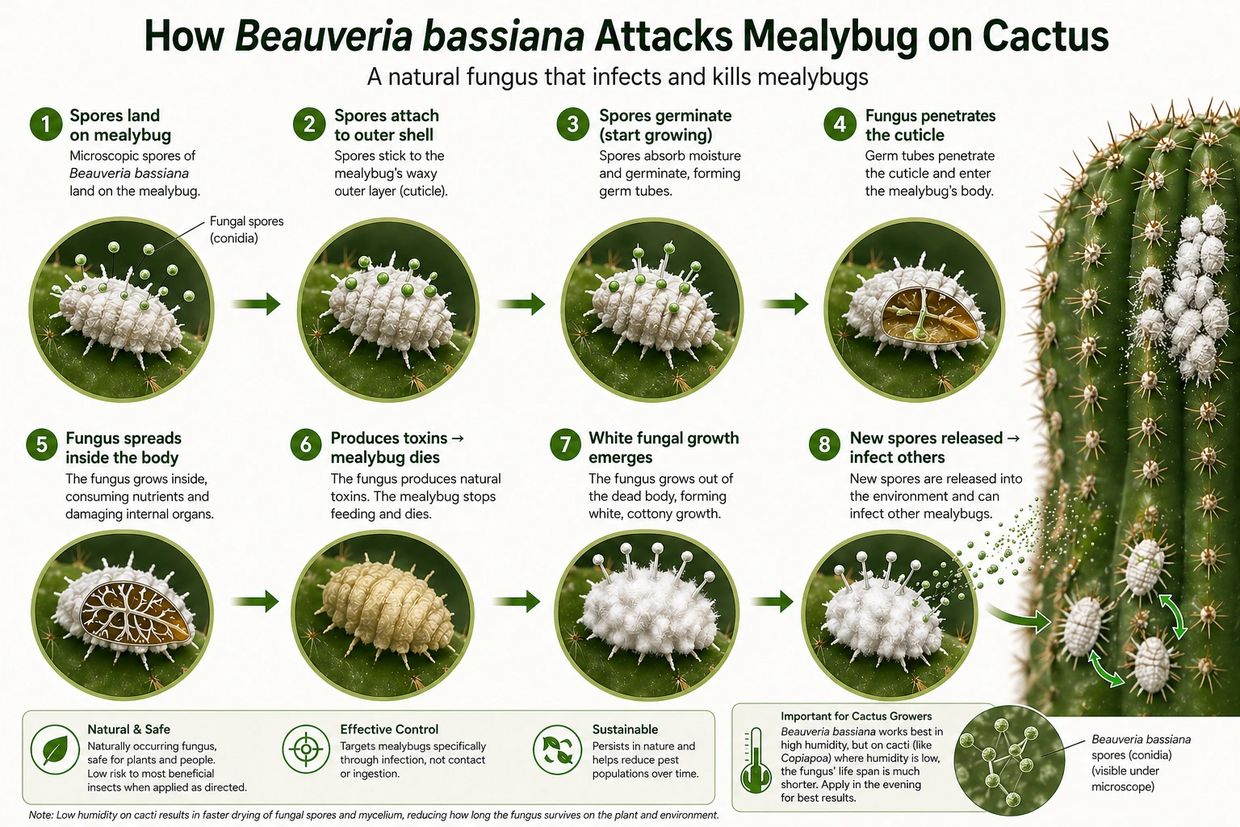
Common Pests: Identification and Control
Note: The methods described below are intended for experienced growers managing high-value collections. Always test any intervention on a single plant before broad application.
➤ Spider Mites
Spider mites thrive in hot, stagnant air. Look for small pale dots on the skin, a faded or washed-out appearance, and fine webbing between spines or in crevices.
Start by knocking them back with a sharp stream of plain water to dislodge webs and mobile mites. Follow with Beauveria bassiana applied to stem surfaces and crevices in the evening or in shade. After application, move plants out of direct sun for 2 to 3 days. Beauveria spores are UV-sensitive and degrade quickly under strong light.
Repeat every 7 to 10 days. Beauveria works by contact and infection, not chemical knockdown, so coverage and repetition matter.
For long-term prevention, predatory mites such as Neoseiulus californicus or Phytoseiulus persimilis are effective biological allies.
➤ Scale Insects
Scale appears as small dome-shaped bumps near areoles and along ribs. Sticky residue on the plant or pot is honeydew, a reliable sign scale is present.
Apply Beauveria bassiana to target the mobile crawler stage, and keep plants out of direct sun for 2 to 3 days after application. For visible scale, remove it manually with a soft brush or cotton swab, then spot treat only that area with 70% isopropyl alcohol. Do not spray alcohol across the whole plant.
Cryptolaemus montrouzieri and lacewing larvae provide effective biological support.
➤ Surface Mealybugs
These appear as white cottony clusters, usually tucked into areoles and joints where they are difficult to reach.
Beauveria bassiana is the primary control. Apply in the evening or in shade, then keep plants out of direct sun for 2 to 3 days to protect spore viability. Repeat applications are required.
For visible clusters, remove them manually with a cotton swab or fine brush dipped in 70% isopropyl alcohol. Spot treatment only, not a whole-plant spray.
Cryptolaemus montrouzieri and green lacewing larvae provide ongoing biological support.
➤ Root Mealybugs
These are the most dangerous pests for Copiapoa because they remain invisible until serious damage is already underway. Watch for unexplained stunting or decline, and inspect the root crown whenever you unpot. White cottony masses are the giveaway.
Treatment requires complete unpotting and working through the following steps:
1. Remove all soil
Clear as much substrate as possible from the root system by hand.
2. Rinse and inspect
Rinse roots thoroughly under a sharp stream of plain water. Manually remove any visible egg sacs. These appear as white cottony clumps and must be dislodged physically (see photo). Alcohol does not penetrate egg sacs, and hot water may not dislodge them. This step is not optional.
3. Treatment soak, choose only one option:
- A brief soak in diluted isopropyl alcohol, no stronger than 50%, for no more than 5 minutes. Rinse thoroughly afterward. Alcohol is effective against active insects but does not destroy egg sacs, so step 2 is critical.
- A hot water soak at 49–50°C (120–122°F) for 10–15 minutes. Temperature control is critical. Use a thermometer, not guesswork. This range is sufficient to kill both active insects and eggs. Temperatures above 122°F increase the risk of root damage without improving effectiveness.
4. Dry completely
For the alcohol path, rinse thoroughly and allow roots to air dry fully for several days in good airflow before repotting.
For the hot water path, fan dry in shade for a few hours, then allow several days of full air drying before repotting.
Do not rush this step.
5. Repot into clean substrate
Use fresh, sterile mineral substrate. Never reuse infected old soil.
6. Wait one week, then apply biological controls
After repotting, allow the plant to settle for approximately one week before applying beneficial nematodes or Beauveria bassiana into the substrate. This gives the root system time to stabilize before introducing additional biological inputs. Since the application is subsurface, UV shading is not required - the substrate itself protects spore viability.
🔴 If root mealybugs keep coming back, check for ants. Ants actively farm mealybug colonies and will reintroduce them as long as a honeydew source is present.
Ants: the warning sign
Ants do not damage Copiapoa directly, but their presence should be taken seriously. They farm mealybugs and scale insects, protecting them and spreading infestations in exchange for honeydew.
Slow-acting borax bait stations such as TERRO are effective. Place them outside pots, under benches, or along ant trails. Workers carry the bait back to the colony, eliminating it at the source.
Diatomaceous earth can be used as a barrier around bench legs, pot exteriors, or access routes. It works by physically abrading the insect exoskeleton. Keep it dry to remain effective and avoid inhaling the dust. Do not mix it into cactus soil, where it can damage root hairs and disrupt microbial activity.
The most effective long-term control is eliminating the pest population. Without honeydew, ants will disappear.
Preventing problems before they start
Quarantine all new plants for 60 to 90 days before introducing them to your collection. Root pests can take weeks to show visible symptoms. Inspect roots, areoles, and crevices regularly.
Maintain strong airflow to prevent stagnant conditions that favor mites and surface pests. Use sterile, mineral-based substrate and water only when fully dry.
Reapply beneficial microbes and soil predators periodically to maintain biological resilience in the root zone.
A Note on treatment intensity
For most pest situations in a well-managed collection, biological controls and sanitation are the most stable approach. However, for widespread or severe infestations, it can be useful to reduce populations quickly with a systemic insecticide.
Systemics provide rapid, plant-wide suppression but function as persistent chemical signals within the plant and root zone. In mineral substrates amended with biochar, their behavior may become less predictable due to adsorption and delayed release, reducing consistency of uptake and effect.
For this reason, systemic use is best treated as a short-term intervention rather than a maintenance strategy. Once the population is reduced, transition back to biological control such as Beauveria bassiana to maintain suppression without maintaining a persistent chemical signal in the system.
Final thoughts
Effective pest management in Copiapoa comes down to observation and restraint. Protect the root zone, keep interventions targeted, and let biological processes do the work where possible.
These plants evolved in one of the most constrained environments on Earth. Their resilience depends on stability, not constant intervention.
Source Basis: Integrated pest management practices follow Charles (1998) and Prisa (2021). Systemic insecticide effects on plant metabolic profiles follow Klatt et al. (2023). Full citations are on the Reference page.
⚠️ The Surfactant & Oil Warning: No soaps, no neem, no detergents
Avoid routine use of dish soap, insecticidal soap, neem oil, or other surfactants on Copiapoa, especially on roots.
These are not neutral cleaners. They are chemically active compounds that interact with plant tissues and surfaces.
Effects on roots
Surfactants are designed to disrupt lipid structures. Root cell membranes are lipid-based, and fine feeder roots are particularly sensitive. At sufficient concentration or exposure time, surfactants can damage these tissues, reducing function and increasing susceptibility to rot.
Effects on pruina
Copiapoa pruina is a microcrystalline wax that contributes to reflectance and surface behavior. Surfactants can alter or remove portions of this wax, and oils can coat the surface, changing how the plant interacts with light and moisture. Recovery is slow and may be incomplete.
Why “insecticidal soap” is not inherently safe
Insecticidal soaps are potassium salts of fatty acids. Their mode of action is disruption of lipid-based protective layers. While effective against soft-bodied insects, this same chemistry can affect plant tissues under certain conditions.
Alcohol is different, but not risk-free
Diluted isopropyl alcohol acts quickly and evaporates without leaving a persistent residue. This limits ongoing interaction with plant tissues, but repeated or heavy application can still cause localized damage.
Root zone effects
Surfactants and oils can also alter wetting behavior and microbial structure in the root zone, particularly in mineral substrates with limited buffering capacity.
Practical takeaway
Use targeted, minimal treatments. Avoid whole-plant or root-zone applications of soaps and oils unless there is a clear reason and conditions are controlled.
The Silent Threat: Recognizing and Combating Rot
Rot: Identification, Treatment & Prevention
Rot in Copiapoa is not a slow decline. It is a rapid physiological collapse. These plants store large amounts of water relative to their surface area, protected by a thin epidermis. When excess moisture, poor drainage, or physical damage allows opportunistic pathogens to breach that surface, internal tissue can liquefy in a matter of days. Once rot establishes, it becomes a race against time. The difference between saving a plant and losing it is often measured in days.
Mealybugs and rot: A direct connection
Mealybugs are not just a pest problem. They are a rot risk. As they feed, they create microscopic damage to root tissue and stem surfaces, forming entry points for pathogens such as Fusarium, Phytophthora, and Erwinia. In a dry, stable system these wounds may never be exploited. Introduce excess moisture, stress, or a substrate that stays wet too long, and those feeding sites become infection pathways.
Root mealybugs are especially dangerous. The damage occurs at the root interface, where moisture and pathogen pressure are highest. A plant that appears to be failing from rot may have had its defenses compromised by an undetected infestation. Early inspection and quarantine are not optional. They protect not only against the pest, but against everything the pest enables.
Trust your instincts: unpot early
One of the most important habits in Copiapoa cultivation is recognizing subtle change. A plant that feels slightly soft, leans without cause, fails to firm up after watering, or simply looks different than it did the week before is signaling a problem.
Do not wait for visible symptoms. Time is of the essence, unpot and inspect the roots and base.
Early root rot and basal infection are often caught at a stage where intervention is still possible, but only if action is taken before the infection reaches the vascular core. Once external collapse is visible, the window for recovery may already be closing.
Recognizing the symptoms
Wet rot presents as soft, sunken, or yielding areas on the stem. Tissue may turn black, brown, or translucent and often produces a foul, fermented odor. This form progresses quickly.
Dry rot is more difficult to detect. The plant may appear normal but feel hollow or woody when handled. Internal tissue is consumed slowly, sometimes leaving little more than a shell of wax and spines.
Root decline often shows as wilting or yellowing despite adequate moisture. This indicates failure of the root cortex and loss of water transport. It is frequently misread as underwatering, which accelerates the problem.
Treatment: the surgical approach
Speed and precision matter more than anything else once rot is confirmed.
Remove the plant from its pot and clear all substrate from the roots. Inspect the base and root crown carefully before making any cuts.
Use a sterile, sharp blade. Cut away all discolored tissue until only clean, firm material remains. This will be bright green or creamy white depending on the species. After every cut, sterilize the blade with 70% isopropyl alcohol before continuing. Skipping this step risks transferring infection into healthy tissue.
The critical check is the center of each cut surface. If any discoloration remains in the vascular core, the infection has moved beyond the cut. Continue removing tissue until the cross section is completely clean. This step is not optional.
Once clean tissue is reached, apply powdered sulfur to the wound surface. Sulfur acts as a surface protectant and inhibits fungal activity.
A localized application of Physan 20, diluted per label instructions, can also be applied to the wound area as a follow up treatment.
Airflow is as important as any chemical treatment. Strong airflow dries exposed tissue and slows pathogen spread. Do not rely on fungicides alone.
Callusing and recovery
Place the plant in a shaded, warm location above 15°C (59°F) with strong airflow. The wound must form a firm, dry callous before repotting.
Small wounds typically callous in 3 to 5 days. Larger cuts or full beheadings can take 2 to 3 weeks. The wound must be completely dry and hard to the touch before the plant is returned to substrate. A soft or tacky surface is not healed.
Once calloused, repot into clean, sterile mineral substrate such as pumice or lava rock. Do not water for at least 7 to 14 days. Allow the plant to settle in dry conditions before reintroducing moisture. This reduces stress on compromised tissue and lowers the risk of secondary infection.
If the base is unsalvageable but the upper portion remains healthy, it can be rooted as a cutting or grafted onto a vigorous rootstock such as Trichocereus.
Prevention
Rot is rarely random. It is usually the result of a mismatch between Copiapoa physiology and cultivation conditions.
Use mineral-dominant substrate with minimal organic content. Organic material retains moisture at the root zone long after the surface appears dry. Maintain strong airflow at all times. Stagnant air at the base of the plant is a consistent contributor to basal rot.
Water only when the substrate is fully dry and temperatures support active metabolism. Avoid unnecessary handling. Even minor surface damage can create an entry point for infection.
When conditions are aligned, dry air, fast drainage, appropriate watering rhythm, and strong airflow, rot becomes uncommon.
🔴 Copiapoa are not fragile plants. They rot when kept warm, wet, and still.
Source Basis: Surgical technique and vascular assessment follow Charles (1998) and Nobel (2002). Substrate physics and cactus anatomy follow Mauseth (2006). Full citations are on the Reference page.
This Copiapoa cinerea survived major surgery to remove deep stem rot from a shipping bruise
Repotting and Staging: Care and Aesthetics
Timing and Frequency of Repotting
Repot Copiapoa on a long interval, typically every three years, ideally in spring as plants exit dormancy and root activity resumes. Very old or slow-growing specimens can remain longer if the substrate remains structurally open and free-draining. Repotting refreshes porosity, restores oxygen availability in the root zone, and reduces long-term risk of compaction, hypoxia, and pest persistence. Even mineral-dominant media slowly degrade and lose structure over time.
Restoring the biological buffer
To re-establish a functional root environment after repotting, incorporate charged biochar into the mix and reintroduce desert-adapted beneficial microbes with the first post-repot watering. This helps stabilize nutrient cycling, improve root resilience, and partially restore the biological buffering that is lost in sterile cultivation.
Soil, potting, and presentation
Apply a fine mineral top dressing such as decomposed granite, pumice, or graded gravel. This stabilizes the soil surface, moderates temperature fluctuation at the root crown, and discourages surface pests such as fungus gnats and wandering mealybugs. It also visually anchors the plant in a habitat-consistent setting.
For a more natural presentation, partially embed a few larger stones into the surface layer to mimic the way Copiapoa anchor among fractured rock in habitat. Arrange elements asymmetrically, often in odd-numbered groupings (1, 3, or 5), following the rule of thirds. This creates visual balance without artificial symmetry and echoes the irregular structure of desert landscapes.
Select pots only slightly larger than the root ball and always with excellent drainage to prevent perched water zones. Bonsai principles apply well here. Pot color, glaze, and texture should support the plant’s presence without dominating it. Unglazed terracotta and restrained ceramics complement Copiapoa without competing visually.
Thermal Albedo considerations during repotting
This is a collector- and conservation-level detail, but a meaningful one.
Repotting is the ideal moment to reset the plant’s thermal microenvironment. Pot color, surface dressing, and surrounding materials directly influence root-zone and stem temperature through reflectivity (albedo). These thermal conditions shape epidermal wax expression, pigmentation stability, and long-term morphology.
Light-colored mineral top dressings and pale containers reflect heat and more closely resemble the reflective substrates of many coastal and transitional habitats. Dark pots, dark gravel, or heat-absorbing surfaces can significantly elevate root-zone temperature even under moderate PAR, pushing plants toward chronic thermal stress and morphology inconsistent with their native ecotype.
Aligning substrate color, surface reflectivity, and container choice with the plant’s ecotype during repotting helps maintain habitat-correct form and stable growth over time. This subtle adjustment has outsized effects on pruina expression, tissue firmness, and stress tolerance.
🔴 The pot should complement the plant, never compete.
Honoring origin through care
Together, these practices, regular repotting, soil renewal, microbial support, natural top dressing, and mindful pot choice, support long-term health and reflect respect for Copiapoa’s desert origins. Care becomes more than maintenance. It becomes stewardship, preserving not only the plant’s appearance but the ecological logic that shaped it.
Source Basis: Root physiology and repotting intervals follow Nobel (2002) and Mauseth (2006). Substrate thermal effects follow Geller & Nobel (1984) and Nobel (1988). Full citations are on the Reference page.